This is your chance for a New Downtown
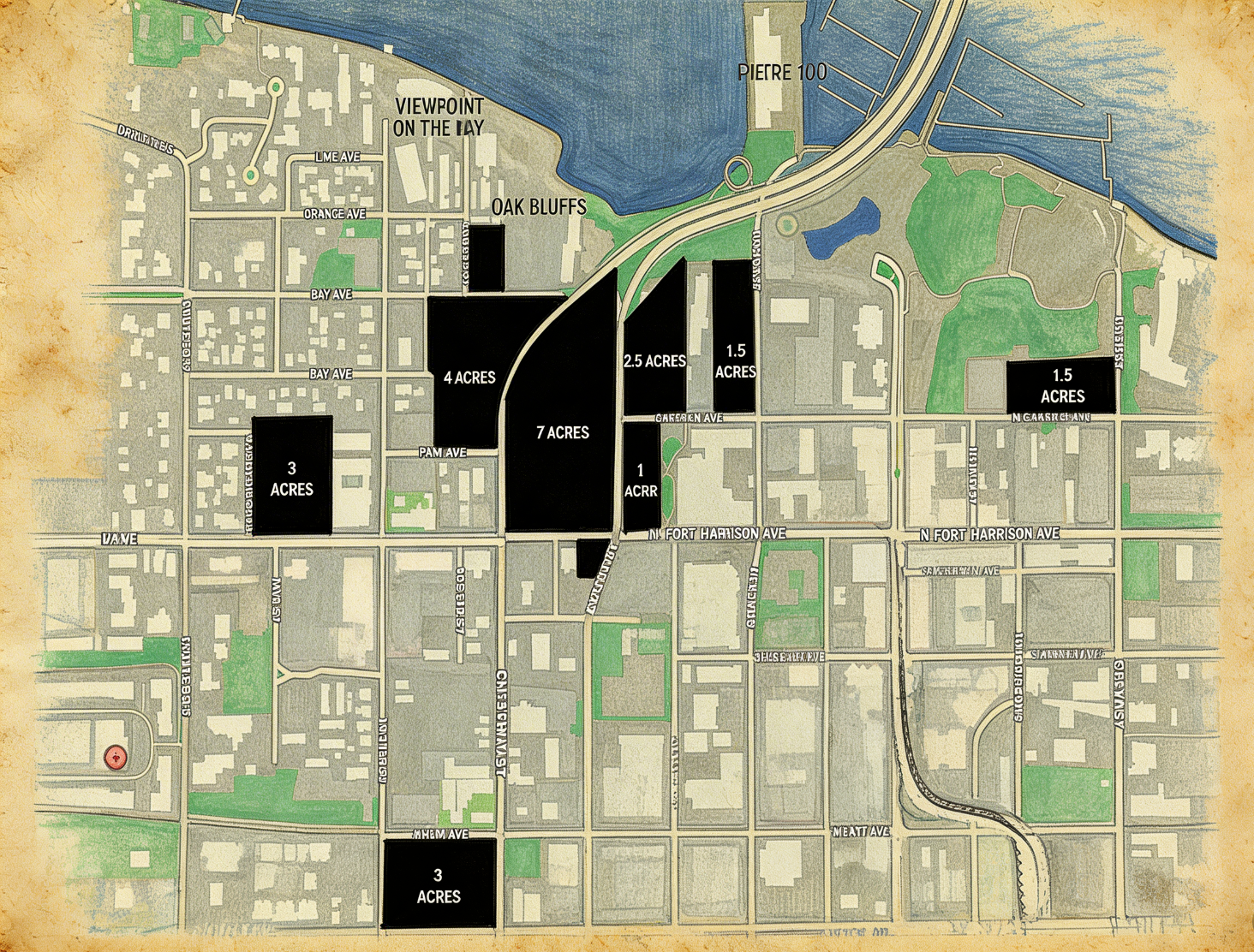
Over 30 County buildings (26 acres) are scheduled to be for sale/lease this Spring. Will our County Commission sell out our city or will they help us build a much needed New Downtown?
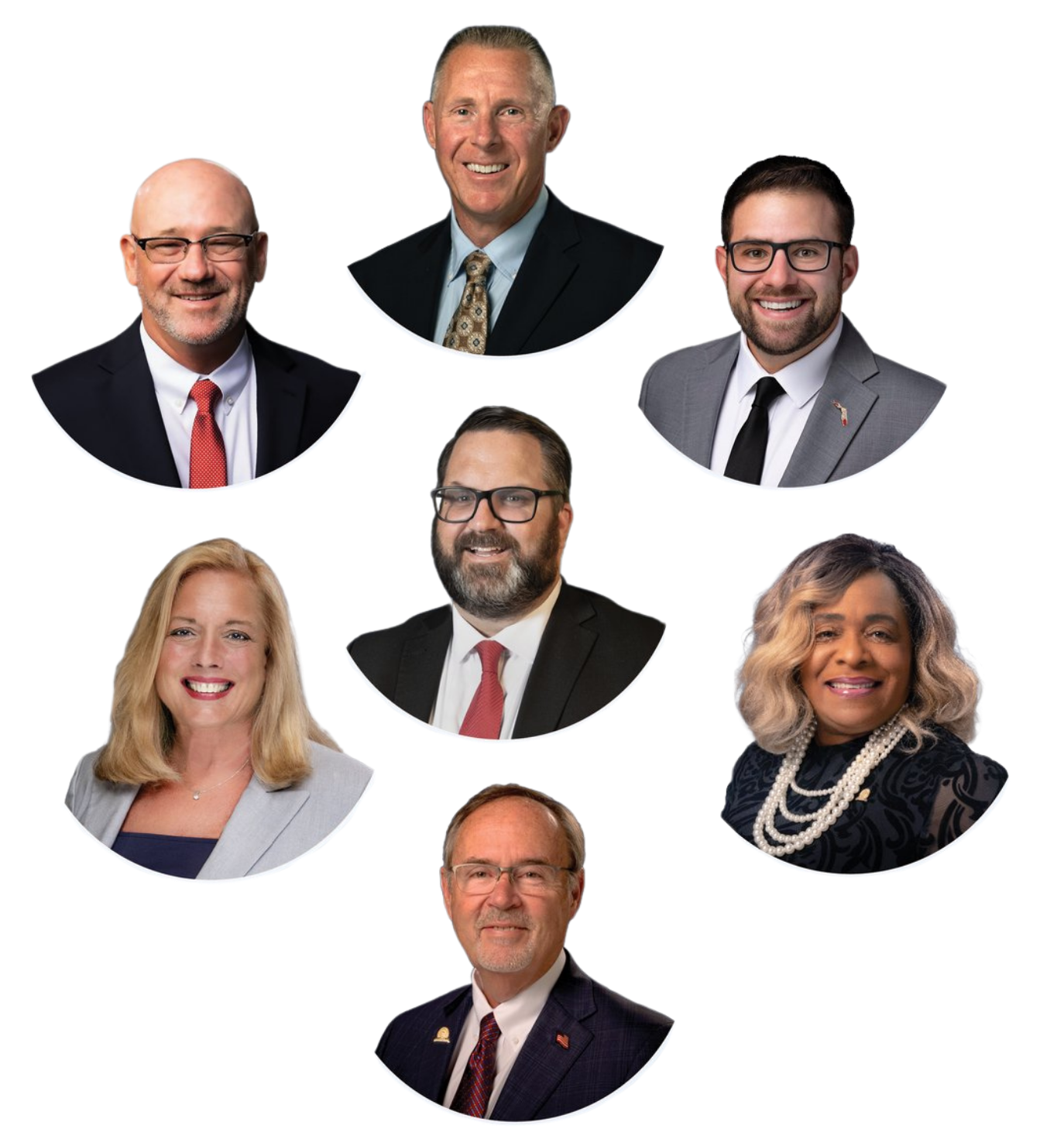
Write your county commissioners!
Tell them to lease our downtown. Don't sell us out!
Fill out the form with your information, and all 7 commissioners will automatically get your message.
Thank you for staying respectful.
New Downtown:
A Once-in-a-Generation Vision for Clearwater
A 40-acre waterfront cultural park district to reconnect downtown Clearwater with its beach, its people, and its future.
My name is Bradon Gibbs. I am 18 years old, and I have lived in Clearwater most of my life. I am writing this open letter as a citizen and student who lives, works, and studies in Clearwater to ask the Pinellas County Commissioners not to blindly sell the County’s downtown campus to the highest bidder, but instead to carefully and thoughtfully plan and protect the land through a lease option with parameters, as I believe it is the last opportunity downtown Clearwater has for a truly thriving district.
I have heard from many neighbors much older than me about how Downtown Clearwater once was, before local businesses were bought up by large corporations and the public was shut out of the waterfront district that should be thriving. The energy that defines Clearwater Beach, one of the most visited beaches in the entire country, disappears somewhere along the causeway and does not exist on the mainland. The historic, once-thriving Downtown Clearwater died long ago, and I believe Pinellas County cannot afford to just mourn its death anymore.
I believe this commission has a chance to birth something new and incredible. Not with another incremental fix, but with a bold, once-in-a-generation project that could define Clearwater for the next hundred years.
I am asking you to consider creating Clearwater Park, a world-class 40-acre waterfront cultural park district in the heart of downtown Clearwater, neighbored by the world-famous Clearwater Beach.
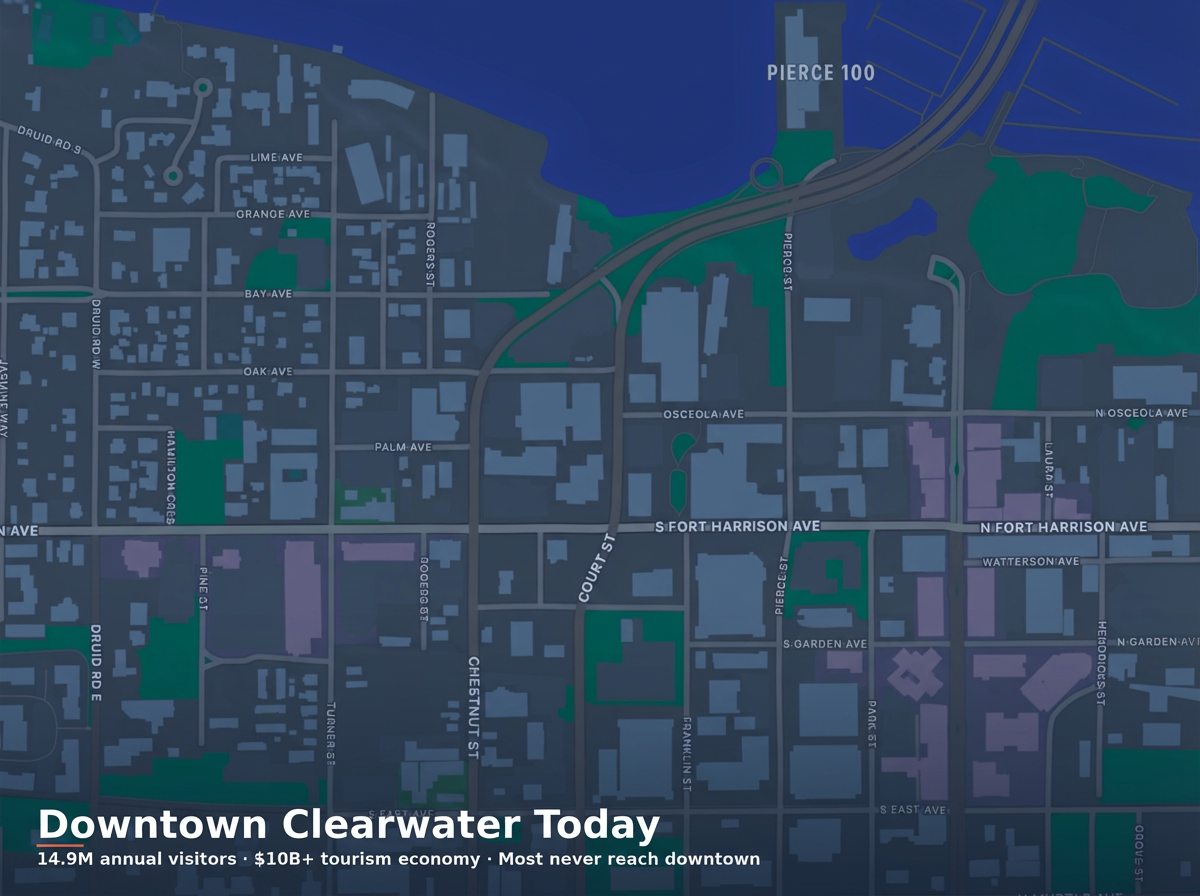
I understand that the solution to Clearwater’s challenges is complex, and I am young, but after spending time researching the City and County’s finances, survey results, and local news coverage, I believe the problem itself is very clear. Pinellas County welcomes nearly 15 million visitors a year. Our tourism economy exceeds $10 billion. Clearwater Beach contributes over 25 percent of those numbers and consistently ranks among the most visited beaches in the United States. But almost none of that economic activity reaches downtown. Visitors arrive, lay on the sand, and leave. Downtown Clearwater, just a few miles east, does not benefit from the millions of cars that drive through it.
The $84 million Coachman Park redevelopment was an important step, and the BayCare Sound amphitheater has already shown what is possible when you give people a reason to come downtown. But one amphitheater alone is not enough to reverse decades of decline. What downtown needs is not a single project. It needs a district. A destination. A reason to come and a reason to stay.
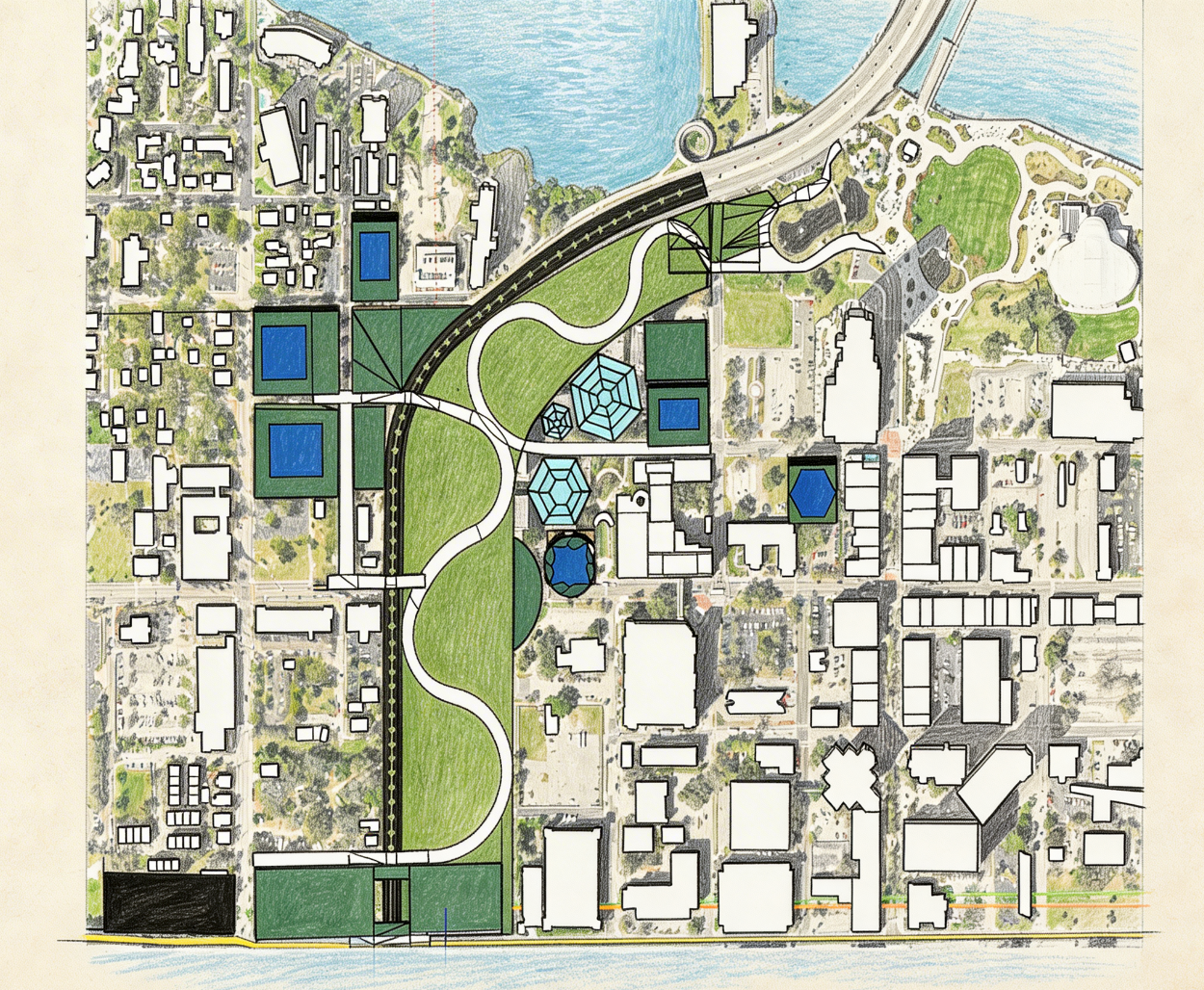
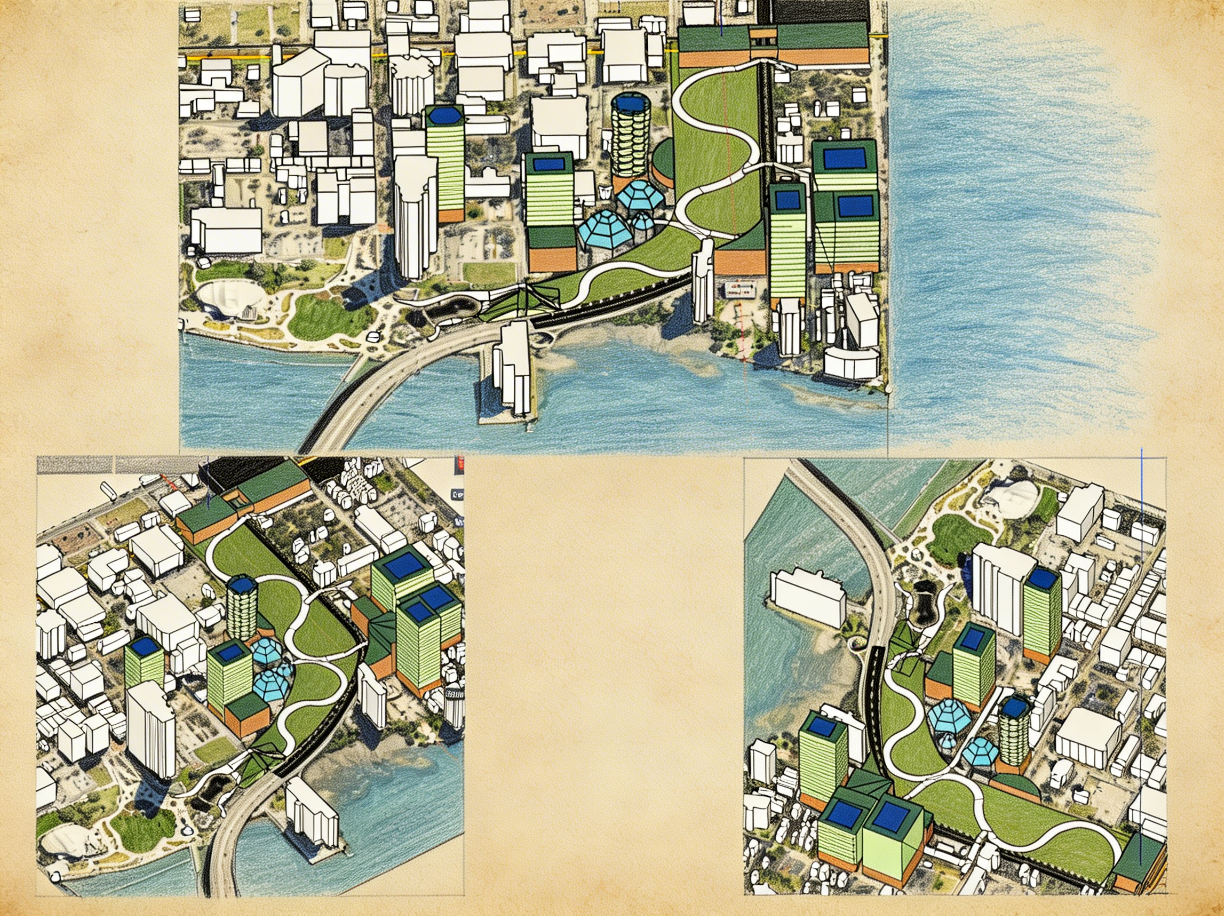
This is not a dream built on land we do not have. Twenty-four acres of county government properties already sit in the heart of downtown, adjacent to Coachman Park. By connecting the current Coachman Park footprint with a portion of county-owned buildings and a few parcels of adjacent land sandwiched between the county campus and the new Clearwater transit center, a 40-plus-acre waterfront park district connecting Coachman Park, the Pinellas Trail, the Clearwater Station transit hub, and the downtown core could be created.
This is the kind of land opportunity that does not come around twice. The parcels are there. The public ownership is there. The question is whether government leaders will listen to the pleas of thousands upon thousands of citizens and voters who want more public space, more high-paying jobs, and more tourism-grabbing attractions downtown.
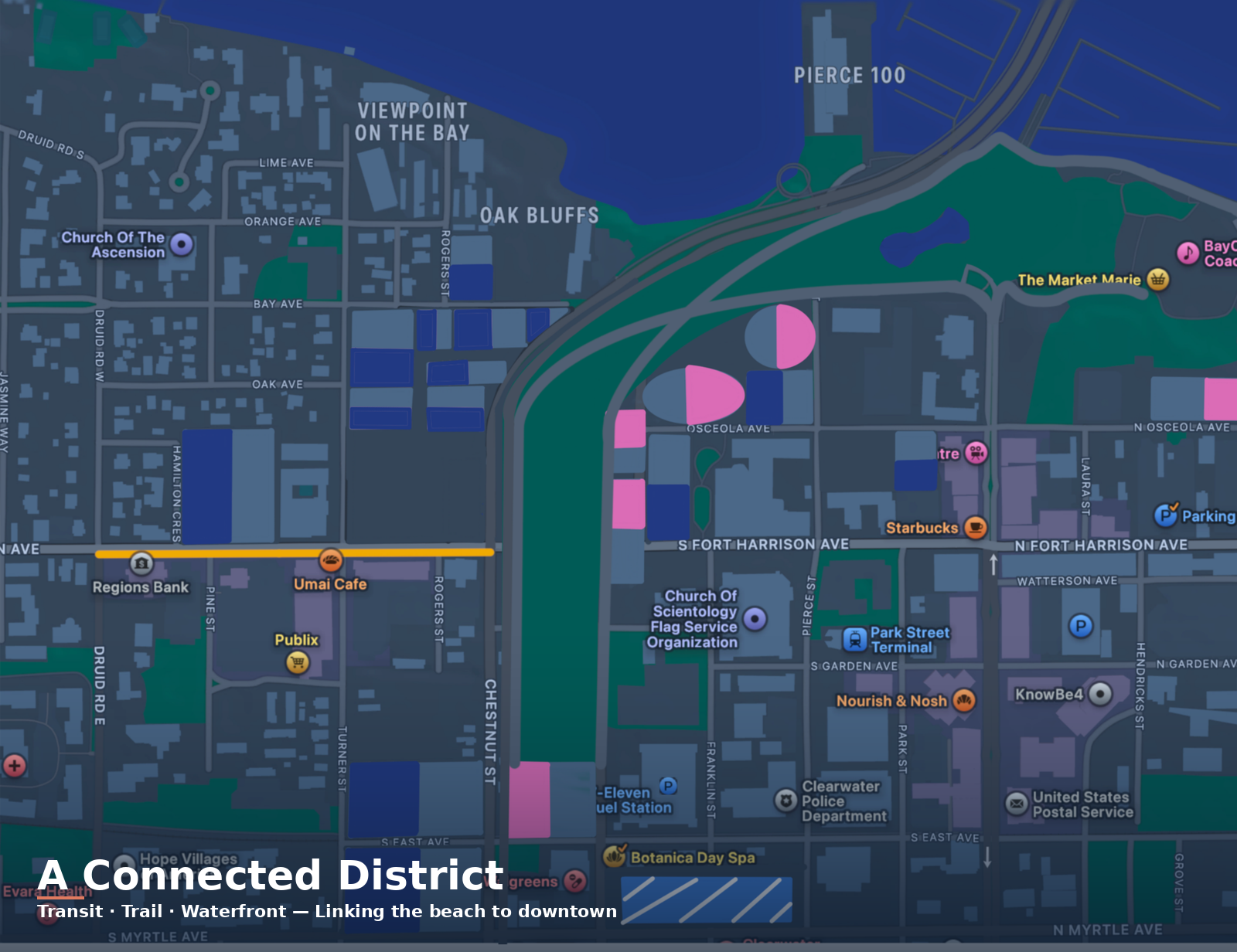
Connecting the Beach to Downtown
A park district is only as powerful as its connections. The vision for Clearwater Park includes transforming downtown into a regional mobility hub with a rapid transit link between Clearwater Beach and downtown, whether by high-speed water taxis, bus rapid transit systems, or even a gondola line. It connects directly to the Clearwater Station transit center and the Pinellas Trail regional bike corridor. Beach visitors can reach downtown easily. Beach workers can arrive on time without worrying about congested traffic or packed lots. Downtown visitors can access the beach without driving. Trail users enter directly into the park district.
The goal is a seamless connection between beach tourism and downtown activity, the kind of two-way flow that is necessary when beach development is maxed out and downtown businesses need more foot traffic. This has been done by successful waterfront cities all over the country. I believe it is time Clearwater looked at examples of success and followed suit.
"Cities do not become great by accident. They become great when their leaders choose to invest in places that bring people together."
A Vision You Can See
I want to show you what this could look like in initial rough sketches. Here is what the Clearwater Park district, a walkable waterfront landscape with winding paths, green space, cultural anchors, and mixed-use development along the edges, could look like. The county retains ownership of the land and leases parcels to developers under terms that require hotel rooms, ground-floor retail, and park maintenance contributions. The public controls the district. The public benefits from lease revenue and increased tourism tax revenue. The private sector builds around a world-class park because world-class parks create demand.
Other Cities Have Done This
I know this sounds ambitious. It should. But it is not unprecedented. Cities across the country have invested hundreds of millions into major parks and been rewarded many times over. New York City spent over $500 million on Hudson River Park, which now attracts millions of visitors a year. San Diego’s Balboa Park draws more than 6 million annual visitors and is the cultural heart of the entire city. Chicago’s Grant Park hosts Lollapalooza. San Francisco’s Golden Gate Park hosts Outside Lands. These parks are not just green space. They are economic engines and cultural magnets.
And we do not have to look far from home. South of Clearwater, in Saint Petersburg, the Pinellas County Commissioners in the 1970s purchased land and built Tropicana Field in an underdeveloped Saint Pete before there was ever a long-term team commitment. The Commissioners in the 1970s took a big swing and invested heavily, which paid off by sparking the stadium-adjacent development that created the thriving city of Saint Pete today. Even recently, this very commission previously pledged over $350 million in tourism bed-tax funding for a Rays stadium proposal last year. That deal failed, but its failure creates a unique opportunity for Clearwater today. Redirecting even a fraction of the commitment the County proposed to a private sports enterprise to a public space, a downtown park district, could transform Clearwater. That is not crazy. That is a possible funding option for Clearwater Park that this County Commission proved when they offered millions to the Rays.
A Year-Round Event Engine
Urban parks over 30 acres have a power that smaller parks do not. They can host major events. Austin City Limits and SXSW take over Zilker Park. Outside Lands fills Golden Gate Park. Lollapalooza transforms Grant Park. These festivals generate massive tourism, fill hotels, create national media exposure, and bring repeat visitors back year after year.
Clearwater already has proof of concept. The BayCare Sound amphitheater at Coachman Park holds 9,000 people and has already brought new energy downtown. A 40-acre park could support music festivals, waterfront markets, food festivals, cultural events, and holiday celebrations. A year-round event engine for downtown Clearwater.
More Than a Park — A Cultural District
The most successful park districts in the country are not just green space. They combine parks, museums, science attractions, gardens, and public event space into a destination that gives visitors a reason to return every season and in every kind of weather. Balboa Park in San Diego, the California Science Center in Los Angeles, and Golden Gate Park in San Francisco anchor entire tourism economies.
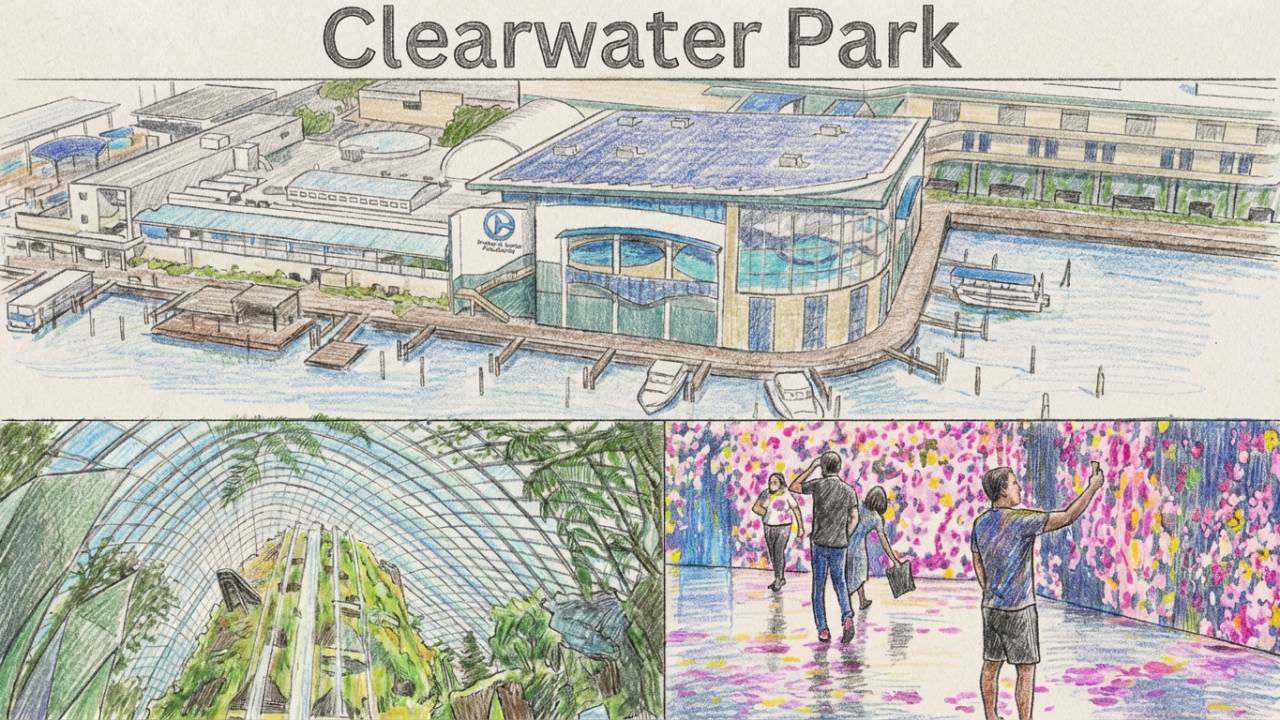
Clearwater Park could be anchored by an expanded aquarium, botanical garden conservatories, environmental museums, marine science exhibits, and waterfront promenades. These are the kinds of attractions that draw families, that work on rainy days, and that build a reputation far beyond our county line. Museums in Clearwater might worry some about competing with Saint Pete, but I want to prove that it will not. Saint Pete is known for its fine art scene and sports anchors. Clearwater Park would have nothing in those two categories.
The Numbers
I understand that for government leaders, vision without numbers is just a college student’s dream. So here are some numbers I was able to put together. The land assembly is estimated at $43 million for 10-plus acres. Public investment in the park expansion would be $150-plus million, distributed through stages and dependent on the county’s vision for tourism-driving attractions. But the private development potential that a 40-acre waterfront park district would unlock, just on county-owned land adjacent to the new Clearwater Park, exceeds $500 million in mixed-use development. The county keeps ownership, leases the land, sets the terms, and benefits from long-term lease revenue and increased tourism tax revenue for decades to come. This is not a blank check to the City of Clearwater. It is a public investment that benefits the whole county and activates downtown Clearwater in a similar way to how the county activated St. Pete all those years ago.
What I Am Asking
I am asking the County Commissioners to see downtown Clearwater as an opportunity to invest in the beach community that has been bringing Pinellas millions of visitors for decades. I am asking you to think in terms of legacy, not just budget cycles. The $84 million Coachman Park investment proved that public investment downtown can work. The next step is to think bigger. To assemble the land while it is available. To create a district, not just a park. To connect the beach to downtown. I am asking you to build something that the whole county can benefit from, something that my classmates and I can benefit from for years to come.
My life and my future in Clearwater will be shaped by what this commission decides to do, which is why I cared enough to take the time to put together this bold vision for the county. I want to live in a place whose government uses the tax dollars and authority it has been given to invest in the community and activate development. I do not want to live somewhere that collects local and tourist tax dollars, is given opportunities to truly transform the community with those resources, but ignores its citizens and chooses to withhold the power for change.
"Make no little plans; they have no magic to stir men's blood, and probably themselves will not be realized."
Daniel Burnham
Founder of modern urban planning
One More Idea: Let the People Dream
I know I have a good idea. If an expanded park district downtown is plan enough for this commission, then you can stop reading this now and start booking meetings with the state and city governments.
I know I have a good idea, but I also know that there could be a better idea that has not been presented to this commission. I believe in the power of a community that is invited to imagine together.
Right now, in Charlotte, North Carolina, an organization called Sustain Charlotte is doing something interesting. The state paused a highway project, and instead of waiting for bureaucrats and consultants to decide what comes next, Sustain Charlotte issued what they call a Request for Visionaries. Not a Request for Proposals, but a Request for Visionaries (RFV).
They invited the public to submit their visions for the future of that corridor. Architects and urban planners, but also students, artists, community groups, and everyone who cares about their city. There are no winners and losers. Citizens can upvote their favorites online. At the end of the submission period, the visions go on public display at a showcase event where city and county leaders are present to see what their residents have imagined.
I think the fact that the “Imagine Clearwater” plan that Clearwater city leaders put together years ago did not envision how the downtown district would grow after a Coachman Park refurbishment is proof that government officials tend to lack big imaginations and an understanding of the needs of communities.
Charlotte admitted this and put together this RFV. Clearwater could do the same.
I am recommending that Pinellas County launch its own Call for Vision for downtown Clearwater. Give the whole community of Pinellas County 60 days to submit their ideas. Hire a local agency to manage the process, build the website, run the outreach, and organize the showcase event. Delay the formal call for proposals to developers by a few months to make room for this. The cost is minimal. The potential is incredible.
Imagine what would happen if you told every resident of Pinellas County that their vision matters. That they are invited to the table. That, for once, the future of these properties paid for by county taxpayers is not being decided behind closed doors, but out in the open.
You might discover ideas that no consultant would ever think of. You would certainly discover that people care more about their city than most leaders realize. And you would send a message that Pinellas County believes in building community-first projects.
A Final Word
I do not have a degree in urban planning or a seat at the table where these decisions are made. I am a marketing student at St. Petersburg College, and I have a lifetime of watching my downtown struggle and my neighbors accept that it has to stay that way.
I believe Clearwater Beach is proof that people want to be here. Coachman Park is proof that public investment works. The land is available. The tourism economy is there. The transit connections are possible. All that is missing is the vision.
I am asking you to imagine bigger than “Imagine Clearwater,” with the help of the whole county.
Respectfully and with hope,
Student @ St. Petersburg College
